Unsere Kategorien

Eine Challenge für die Sehgewohnheiten

Eine Kritik zu "The Body Remembers When The World Broke Open"
For English Version

Áila verkörpert alles, was Rosie nicht ist: Zwar wird sie auch als indigen bezeichnet, jedoch ist sie schlank, privilegiert, wohnt in einem schönen Apartment und kann bestimmen, ob sie ein Kind bekommen möchte. Rosie indes, aus einem indigenen Volk Kanadas stammend, von ihrem Freund unterdrückt und misshandelt, verfügt über keinerlei Mittel, alleine zurecht zu kommen. Noch dazu ist sie hochschwanger. In „The Body Remembers When The World Broke Open“ kommt es zu einer Begegnung der besonderen Art zwischen diesen beiden Charakteren.
Als Áila Rosie auf der Straße entdeckt, barfuß, vollkommen verlassen und überfordert im Regen stehend, den Freund auf der anderen Seite der Straße wütend brüllend, nimmt Áila sie kurzerhand bei sich zuhause auf. Angelehnt an ein One-Cut-Format entfaltet sich der Film an einem Nachmittag auf authentische Weise und läuft dabei fast in Echtzeit ab. Die Unsicherheit und Ratlosigkeit auf Seiten Áilas, wie sie nun mit der Situation umgehen soll, werden zu Beginn präzise eingefangen, wodurch sich die ZuschauerInnen mit ihr identifizieren können. Gleichzeitig erfolgt die Charakterisierung Rosies, die äußerst antipathisch dargestellt wird. Den Umständen entsprechend wirkt sie ungebildet, ungepflegt und unansehnlich, redet nicht und versucht auch nicht, Áila auf irgendeine Art zu unterstützen, klaut ihr im Gegenteil bei erstbester Gelegenheit das Portemonnaie. Es fällt schwer, mit so einer Person umzugehen, mit der man sich in keinster Weise identifizieren kann, die noch dazu keinerlei westlichen Schönheitsidealen entspricht. Jedoch ist es genau dies, was den Film so realistisch und besonders macht.
Der weitere Verlauf des Films zeigt Möglichkeiten für Rosie auf, wie sie ihrer aktuellen Situation entfliehen kann. Dabei wird vermittelt, wie Frauenhäuser versuchen Mädchen oder Frauen in ähnlichen Positionen wie Rosie zu helfen, sie dabei jedoch unter keinerlei Druck setzen möchten, sondern die Vorteile aufzeigen, sie jedoch auch gehen lassen, falls sie sich entscheidet, in ihr gewalttätiges Umfeld zurückzukehren. Es ist frustrierend und ernüchternd, ihre Lage mitanzusehen. Auch wenn man die Antipathie nicht ganz ablegen kann, so lernt man mit der Zeit jedoch, Mitgefühl für sie zu entwickeln, wenn sie davon erzählt, wie der Freund sie so sehr schlägt, dass sie sich nicht mehr die Haare kämmen kann, da sie die Schmerzen nicht ertragen würde. Im anschließenden Publikumsgespräch verweisen die zwei Regisseurinnen auf den hohen Anteil der häuslichen Gewalt insbesondere bei indigenen Frauen und das noch höhere Risiko, das sie sich aussetzen würden, wenn sie ihren Partner verlassen würden. All dies macht auf die Ungerechtigkeit der Welt sowie die Misshandlung und Unterdrückung von Frauen, insbesondere nicht weißen Frauen, aufmerksam.
In dem Film hat die Co-Regisseurin Elle-Máijá Tailfeathers eine persönliche Begegnung verarbeitet, spielt Áila sogar selbst. Alles wirkt äußerst authentisch, insbesondere das One-Cut-Format zeigt deutlich die Bedeutung dieses einen Nachmittags für sie. Und auch das Publikum wird nachdenklich gestimmt ob dieser Ungerechtigkeit und Aussichtslosigkeit der Situation. Der Film zeigt auf, dass man nicht immer helfen oder die Entscheidungen für jemand anderen treffen kann und gerade in solchen Gegebenheiten der Entschluss von der Leidtragenden letztendlich selbst kommen muss.
Ein Film, der mich sehr berührt hat, mich zwang, über die Antipathie hinwegzukommen, und mich mit einer Aussichtslosigkeit und Hoffnungslosigkeit konfrontierte, die schwer zu ertragen ist. Äußerst sehenswert!

Sonntag, 17. Februar 2019, Sarah Gosten


Challenging Viewing Habits


Áila embodies everything Rosie is not: while also being indigenous, she still is slim and privileged, lives in a beautiful apartment and can decide whether she wants to have a child or not. Rosie, however, from an indigenous people of Canada, oppressed and abused by her boyfriend, has no means to get along on her own. Moreover, she is quite pregnant. In "The Body Remembers When The World Broke Open" a very special encounter between these two characters is shown.
When Áila discovers Rosie on the street, standing in the rain barefoot and completely overwhelmed, her boyfriend on the other side of the street angrily roaring, Áila takes her in. Based on a one-cut format, the film unfolds in an authentic way in one afternoon running almost in real time. The insecurity and helplessness on the side of Áila, who does not know how she is supposed to deal with the situation, are precisely captured at the beginning making the audience identify with her. At the same time, the characterization of Rosies takes place, who is portrayed in an extremely antipathic way. According to the circumstances she appears uneducated, unkempt and unsightly, does not talk and does not try to support Áila in any way, on the contrary is stealing her wallet at the first opportunity. It is difficult to deal with such a person not being able to identify yourself with her in any way. However, this is exactly what makes the movie so realistic and special.

The further course of the film shows up ways on how Rosie could escape her current situation. The film shows how women's shelters try to help girls or women in similar positions as Rosie. Trying to not put them under any pressure they rather show up advantages, but also let them go if they decide to return to their violent environment. It is frustrating to see her situation. Even if you cannot completely rid yourself of the antipathy, you learn to develop compassion for her over time hearing her talk about how her boyfriend beats her so hard that she cannot comb her hair, not being able to stand the pain. In the following audience discussion, the two co-directors refer to the high proportion of domestic violence, especially among indigenous women, and the even higher risk they would expose themselves to if they were to leave their partner. The injustice of the world as well as the abuse and oppression of women, especially non-white women, are highlighted.
In the film, co-director Elle-Máijá Tailfeathers processes her personal encounter with a comparative situation, even playing Áila herself. That is another reason for everything to seem extremely authentic. Especially the one-cut format clearly shows the importance of this one afternoon for her. Furthermore, the audience is made to think about the injustice and hopelessness of the situation showing that you cannot always help or make decisions for someone else and that it is precisely in such circumstances that the person who suffers has to come to the conclusion herself.
A film that touched me very much, forced me to get over my antipathy and confronted me with a hopelessness that is difficult to bear. Extremely worth seeing!

Sunday, 17th Feb 2019, Sarah Gosten

»When will my life start to shine?« – Kritik zu »Beol-sae«

Vincent
For English Version

Atmosphärisch und ergreifend, fein und edel. »Beol-sae« ist ein vollkommener Film.
Wenn ich mich an dieses Seheerlebnis zurückerinnere, bekomme ich immer noch Gänsehaut.
138 Minuten lang ist das Langfilmdebüt der südkoreanischen Regisseurin Kim Bo-ra.
Ich werde durch jeden Moment getragen. Es fühlt sich an, als würde ich schweben.

Uns wird die Geschichte von Eun-hee erzählt, die sich im Seoul des Jahres 1994 zurechtfinden muss. Sie findet keinen Halt in der konservativen und aus heutiger Sicht moralisch verwahrlosten, missbrauchenden Familie oder bei den sie nicht verstehenden Schulkameraden und ihrer einzigen Freundin.
Eun-hee verliebt sich und wird enttäuscht. Sie wandelt durch das an ihr vorbeigehende Leben bis sie auf ihre neue Chinesischlehrerin Young-ji trifft, von der sie Aufmerksamkeit und Liebe bekommt und Inspiration findet. Young-ji hat eine noble Seele. Sie geht ganz sachte und fein, fast schon erhaben mit der verunsicherten Eunhee um. Die Interaktion der Beiden fühlt sich ganz besonders und einzigartig an.

Beol-sae | House of Hummingbird Generation 2019 KOR 2018 von: Kim Bo-ra Kim Sae-byuk, Park Ji-hu © Epiphany Films

Wenn ich Eun-hee in die Augen blicke, finde ich meine eigenen Unsicherheiten und Zweifel wieder. Im anschließenden Q&A verstärkt mir die Regisseurin und Drehbuchautorin Kim Bo-ra den Eindruck eines sehr persönlichen, aber nicht weniger perfekt inszenierten Filmes. Inspiriert wurde das autobiographische Bewegtbild von einem Albtraum der Regisseurin, in dem sie wieder zur Schule gehen musste.
In der Gesellschaft, in der Eun-hee groß wird, geht es nur um Leistung und Vereinheitlichung. Es fällt mir nicht schwer, ihr Gefühl der Einengung zu teilen.
Ein weiterer zentraler Bestandteil Bo-ras komplexen Werkes ist das Finden der eigenen sexuellen Identität. Sie geht mit diesem Thema ganz sensibel und natürlich um und verfällt zu keinem Zeitpunkt in stereotypisiertes, plakatives Erzählen. Dinge passieren, ohne dass sie zwangsweise benannt werden müssen. Kim Bo-ra hat Kino verstanden.

Ich kann das Interview der Regisseurin mit dem »Teddy Award« - Team sehr empfehlen. Es spiegelt meine Seherfahrung wider und zeigt abermals, wie überaus durchdacht der Kopf hinter diesem großartigen Film ist.
Hier ist der Link.

15.02.2019, Vincent Edusei


»When will my life start to shine?« – Review of »Beol-sae«


Atmospheric and moving, keen and noble. »Beol-sae« is a complete film.
When I am reminiscent of this experience, I´m still getting goosebumps.
The feature film debut of South Korean director Kim Bo-ra is 138 minutes long.
I am being carried through every single moment. It feels like I am floating.

Being told is the story of Eun-hee who has to find her way in 1994´s Seoul.
She doesn´t find stability in her conservative and from today´s point of view morally degenerated, abusing family or in the connection with classmates and her only friend who all don´t understand her.
Eun-hee falls in love and gets disappointed. She wanders through a passing life until she meets her new Chinese teacher Young-ji, from whom she receives attention, love and inspiration.
Young-ji has a precious heart. She treats the insecure Eun-hee in a gentle, almost elevated way.
Their interaction feels special and unique.

Beol-sae | House of Hummingbird Generation 2019 KOR 2018 von: Kim Bo-ra Kim Sae-byuk, Park Ji-hu © Epiphany Films

When I am looking into Eun-hee´s eyes I am rediscovering my own uncertainties and doubts.
In the subsequent Q&A, writer/director Kim Bo-ra intensifies the impression of a very personal but not less perfectly constructed film. The moving image is inspired by a nightmare the director experienced in which she had to go to school again. In the society in which Eun-hee is being raised everything is about performance and unification.
For me it isn´t hard to relate to that feeling of restriction.

Another central piece of Bo-ra´s complex work is the quest to find ones sexual identity.
She deals with this topic incredibly sensitive and natural and does not fall into stereotypical, bold and simple narratives. Things happen without necessarily having to be told. Kim Bo-ra understood cinema.

I can really recommend the interview with the director made by the »Teddy Award« - crew.
It mirrors my experience and again shows how greatly the head behind this piece of art has thought it through.

Here is the link.
15th of Feb. 2019, Vincent Edusei

Die rechte Szene auf der Berlinale Leinwand

Liv
For English Version

Synthetische Popmusik dröhnt in den Saal des Haus der Kulturen der Welt. Auf der Leinwand eine Gruppe von Mädchen, die tanzt und sich schminkt, dann „die coolen Jungs“, die über Motorräder reden und sich prügeln. Kiira und Lenni sind der Schnittpunkt der beiden Cliquen. Sie sind 15, ein Paar – und in 9 Monaten werden sie Eltern. Während die Geburt des Kindes immer näher rückt, spitzt die Situation sich zu. Konflikte entstehen. Kiiras naive Leichtigkeit verblasst. Sie erkennt die Probleme, die auf sie zukommen werden. Lenni ist mit der Situation überfordert und sucht Halt. Er findet sie in der rechtsextremen Gruppe der Nachbarschaft. So versucht der finnische Gewinnerfilm des gläsernen Bären 2019 „Hölmö Nuori Sydän“ (Stupid young heart) die Themen Teenagerschwangerschaft und wachsender Rechtsextremismus zu verbinden.


Zunächst bin ich etwas abgeschreckt von den Bildern auf der Leinwand. Die Charaktere wirken stereotypisch und flach. Ein Mädchen, dass sich stark schminkt, sexy tanzt und mit ihren Freundinnen über Instagram und Twitter redet. Die Jungs machen nur was mit Jungs. Die Mädchen nur mit Mädchen. An einigen Stellen fällt mir sogar ein Wechsel zwischen rosa und blauen Farbtönen auf, als das Bild von Kiira zu Lenni wechselt. Die poppige, synthetische Musik gefällt mir überhaupt nicht, aber sie spiegelt das Leben und die Art der beiden Teenager wieder. Aus diesem Grund freunde ich mich im Laufe des Filmes, gegen meinen persönlichen Musikgeschmack, mit dem Sound an – und dann überrascht mich „Hölmö Nuori Sydän“ mit einem dynamischen Wechsel. Je näher die Geburt des gemeinsamen Kindes rückt, desto mehr gewinnt der Film an Handlung und die Charaktere an Tiefe. Die anfänglich naive, oberflächliche Stimmung verfliegt. Gegen Ende springen die Szenen zwischen parallelen Handlungssträngen. Dadurch entsteht eine Dynamik und Spannung, die im Kontrast zum ersten Teil des Filmes steht. Die Ereignisse werden ernster, die Konflikte größer. Nun zeigt sich auch das Talent der jungen Schauspieler. So beeindruckt mich die Leistung der beiden jungen Menschen gegen Ende des Filmes. „Hölmö Nuori Sydän“ schafft es mich nach anfänglicher Skepsis zu fesseln und meine Kritik etwas zu relativieren.

Im Generation-Programm der letzten Jahre liefen viele Filme über Teenagerschwangerschaften. Ich erinnere hier zum Beispiel „Baby Blues“, der polnische Gewinnerfilm der Sektion 14+ im Jahr 2013. Was „Hölmö Nuori Sydän“ von den anderen Filmen unterscheidet und sehenswert macht, ist das Bild von Hoffnung das erzeugt wird. Zu oft habe ich Filme gesehen, in denen dargestellt wurde, wie schrecklich Teenagerschwangerschaften sind, dass es das Leben der jungen Menschen nur kaputt macht und auf niemals funktionieren kann. „Hölmö Nuori Sydän“ ist anders. „Es gibt immer Hoffnung!“, sagt Regisseurin Selma Vilhunen im Publikumsgespräch.
Es muss jedoch erwähnt werden, dass der Film das Thema Rechteextremismus eher anschneidet als wirklich behandelt. Ich hatte erwartet, dass diesem Thema mehr Raum gegeben wird, aber „Hölmö Nuori Sydän“ ist ein Film über eine Teenagerschwangerschaft, nicht über politisch rechte Tendenzen.

Ein Film der tatsächlich das Thema Rechtsextremismus behandelt ist der US-amerikanische Film „Skin“, der im Rahmen der Sektion Panorama der diesjährigen Berlinale läuft. Nach wahren Begebenheiten erzählt der Film die Geschichte des Rechtsextremisten Bryon Widner. Als er aus der Szene aussteigen will, lässt er sich in einem monatelangen, schmerzhaften Prozess alle seine Tattoos mit politisch rechtsextremer Bedeutung entfernen. Der innere Wandel wird am Körper des Mannes sichtbar. In Rückblicken wird erzählt, wie es zu diesem Wandel gekommen ist. Ja, dieser Film bringt das Thema Rechtsextremismus schonungslos auf die Leinwand. Eine große Gruppe von Neonazis läuft mit Fackeln in der Hand über eine Brücke und schreit. Man blickt in Gesichter voll Wahnsinn und Hass. Im selben Moment rieche ich das starke Parfüm von dem Mann, der neben mir sitzt – mir wird schlecht.


„Skin“ zeigt gehäuft extrem gewalttätige Bilder und ich frage mich, ob das die richtige Herangehensweise an diese Thematik ist. Rechtsextreme Menschen sind schrecklich – keine Frage, aber ich glaube ihr Leben besteht aus mehr als Leuten in die Fresse zu schlagen. „Skin“ ist überladen von Gewalt und atmosphärischer Musik. Von allem etwas zu viel!
Am Ende sitze ich distanziert im Kinosessel und denke: Ne, so irgendwie nicht! Wir werden wohl noch warten müssen auf einen Berlinale-Film, der das Thema Rechtsextremismus auf eine humane und produktive Weise behandelt.


15.02.19, Liv Thastum


Right-wing populism on the Berlinale screen


Synthetic pop music fills the House of World Cultures. On the screen a group of girls dancing and applying make-up, then "the cool boys" talking about motorcycles and fighting. Kiira and Lenni are the connection of the two cliques. They're 15, a couple - and in 9 months they will be parents. As the child's birth gets closer, the situation gets serious. Conflicts arise. Kiiras naive easiness fades. She discern the problems she will face in the future. Lenni is overwhelmed with the situation and searches for something to hold on. He finds it in the right-wing group of the neighborhood. This is how the Finnish film "Hölmö Nuori Sydän" (Stupid young heart) tries to combine the themes of teenage pregnancy and the growing right-wing populism.

At first I am a little deterred by the pictures on the screen. The characters seem stereotypical and flat. A girl who puts on make-up, dances sexy and talks to her friends about Instagram and Twitter. The boys only do something with boys. The girls only with girls. At some points I even notice a change between pink and blue light when the picture changes from Kiira to Lenni. I don't like the synthetic pop music at all, but it reflects the life and nature of the two teenagers. That's why I get along with the sound throughout the film, against my personal taste in music. Then "Hölmö Nuori Sydän" surprises me with a dynamic change. The closer the birth of the child comes, the more the film gains in plot and the characters in depth. The initially naive, superficial mood fades away. Towards the end, the scenes jump between parallel actions. This creates a dynamic and tension that contrasts with the first part of the film. The events become serious, the conflicts bigger. Now the talent of the young actors becomes apparent. Towards the end of the film the performance of the two young people impresses me. This is how "Hölmö Nuori Sydän" relativizes my initial skepticism and captivates me.


There were shown many films about teenage pregnancies at the Berlinale Generation program of the last years. I remember, for example, "Baby Blues", the polish winner-film of section 14+ in 2013. What distinguishes "Hölmö Nuori Sydän" from the other films and makes it worth watching is the picture of hope it creates. Too often I have seen films that show how terrible teenage pregnancies are, that it only destroys the lives of young people and can never work out. "Hölmö Nuori Sydän" is different. "There is always hope," says director Selma Vilhunen in the Q&A after the screening. However, it has to be mentioned that the film only touches on the topic of right-wing extremism rather than really dealing with it. I had expected the film to give more space to this topic, but "Hölmö Nuori Sydän" is a film about teenage pregnancy, not about political right-wing tendencies.

A film that actually deals with the topic of right-wing extremism is the US-american film "Skin", which is shown as part of the Panorama section of this year's Berlinale. Based on true events, the film tells the story of the right-wing extremist Bryon Widner. Wanting to get out of the scene, he has all his tattoos with political right-wing extremist meaning removed. It is a painful process that lasts for months. The inner change becomes visible on the man's body. In retrospects, the film tells how this change of mind came about. Yes, this film ruthlessly brings the subject of right-wing extremism to the screen. A large group of neo-Nazis walk across a bridge with torches in their hands - screaming. Faces full of madness and hatred are shown. In that moment I smell the strong perfume of the man sitting next to me - I feel sick.


"Skin" shows a lot of extremely violent pictures and I wonder if this is the right approach to this topic. Right-wing extremists are terrible - no question, but I think their lives are more than just punching people in their faces. "Skin" is overloaded with violence pictures and atmospheric music. A bit too much of everything!
At the end I sit distanced in the cinema-chair and think: No, not like this! Apparently we will have to wait for a Berlinale-film that deals with right-wing populism in a human and productive way.

15.02.19, Liv Thastum

"The fact that they survived is a huge hope by itself."

Clara & Liv
an interview with the team of "Reconstruction Utøya"

After the screening of „Reconstruction Utøya“ I was quite nervous about interviewing the team, because I was so deeply affected by the film, but I also had the feeling I really needed to get to talk about the film with the team. At half past five Liv and I entered the Berlinale Palast, were we would meet the director, Carl Javér, and Jenny and Torje, who did two of the reconstructions. We got warmly welcomed with a bottle of water and sat down to start.

You said producing the film took about four years. When and why did you get the idea to make such a film and why did it take so long?

Carl Javér: It started late in 2014, when the Shwedish Democrats, which is a right winged-party, had done its best election ever. I was thinking a lot about Utøya and the political background of it at this time, and wanted to find a way of telling the story without focusing on the terrorist, but on the survivors, who are the rightful owner of the history in my view. First I felt it was almost impossible to make a film about Utøya, but when I got the idea of the method I used I had the feeling that it was possible. So I contacted the support group of Utøya and told them about the project, and I was allowed to send a letter to the close facebook group of the survivors. I told about the reconstruction I planned to make and asked for people who maybe wanted to be part of it. A few answered, Jenny was one of them.

And after all was organised, did you take just one session of filming with all four reconstructions, or were there several filming periods?

CJ: It took quite a while because we wanted to try the methods first. So after one year we did a test-filming with Torje and Jenny to try it out, and I also filmed a little bit at home with the survivors. So first after all this we did the actual filming that took two weeks. Of course we had much more film material than it is shown in the movie, because we’ve had four different cameras in the room, two on the floor and two under the roof, plus one camera from the outside. We actually had much good material we had to cut out and cutting down the film was maybe one of the hardest things.

We want to speak out also our biggest respect to the group of participants. How did you find them and who are they? Did they prepare in a way before filming?

CJ: First of all they needed to be over eighteen and should’ve had more than a year of acting-experience, because it was quite important for us that they knew how to step in and out of a role. But they weren’t actually invited as actors, we invited them as human beings who want to help and unterstand the event on Utøya. So for us it was really important that they really wanted to help and not just to be in a film. We had a day of exercising before filming, were we talked and shared a little bit of our experiences of Utøya. But most of them didn’t know each other before the camp and didn’t had contact with the topic before, we picked them from all over Norway because we wanted them to have different dialects.

We wonder how it was for all the participates on the camp, because two weeks together are quite a long time and the topic is so difficult to handle. So we want to know from Jenny and Torje how it actually was being there together, especially beyond the reconstructions.

Jenny: It was really nice and I would say we got really close to each other in these two weeks. I think because we were sharing so much it didn’t took very long getting to know each other. We were living there on the film camp, so we were having all meals together and did often things outside by the fire together.

The camp is located in the very north of Norway, surrounded by the beautiful Scandinavian landscape. Javier tells us that the filming was in June, so it was never dark outside. The end scene for example, were they’re dancing, was actually filmed two o’clock in the morning.

One thing we noticed while watching the film was the quite professional sort of directing the group in the reconstruction of Torje. So we really want to know if he had experiences with directing before.


Torje: Yes, I was actually going to theatre school while we were doing the reconstruction. Also I’m very fascinated by directing and ended up with directing a little play. So thats something I really enjoy doing. Maybe I showed something of it in the reconstructions, through it was obviously quite different from acting in theatre.

We think that’s really impressive and want to a little more about the future plans of him and Jenny. Torje tells us, that he is actually producing and studying music, and likes doing stuff that has to do with art. Jenny is also very interested in the film business and works with documentary films. Recently she got the funding for her first movie. Quite inspiring young people.

Last but not least we want to know about one big thing:

The film actually gives us much hope and there are also a few „happy moments“. Did you plan making a movie that should spend hope and courage or was it something that grew while producing it?

CJ: No, I wanted this from the beginning. I feel that its very important, and I think the fact that the four who did the reconstructions all survived is a huge hope by itself. In addition It’s also a hope for me that there were young people looking to an event like this and learning from it. After the filming some of the participants said: „This was a act of terror that hit all generations and we have to deal with it“. And I feel that is true for all of us.

We want to thank for the interview, but before we’re leaving Javér also wants to know something from us: what we can take with us from the film.

We actually can take very much with us from the movie. But the biggest part is maybe that we are stronger together and should be grateful for being together. We saw all this young people in the movie who are part of the next generation, which we are too, and so it is in our hands to change something. And when we talk about and deal with things some happened in the past, like the Utøya event, we are maybe more able to do better in the future.

15.02.2019, Clara Bahrs

Der Löwe

In dem Film „Anbessa“ geht es um einen kleinen Jungen namens Asalif, der mit seiner Mutter in Äthiopien in einer kleinen Hütte lebt. Asalif ist einer kleiner, verspielter junge mit viel Fantasie und einem großem Herz. In dem schönen Dorf, in dem er früher gelebt hat, wurden viele Hochhäuser gebaut. Deshalb wurden Asalif und seine Mutter umgesiedelt. Der Film zeigt welche Folgen es hat, wenn man so schnell in eine Stadt eingreift. Der kleine Asalif bastelt gerne mit Kabeln, die er auf der Müllheide gefunden hat, weil es in seiner Hütte nur den Strom gibt, den er selber baut.

Mich berührt die Stelle an der Asalif zu seinem neuen Freund geht, um ihm seinen neuen selbstgemachten Hubschrauber zu zeigen. Der Freund wohnt in einem von den neuen Häusern mit richtigem Strom und Fernseher. Asalif zeigt voller Stolz seinen selbstgebauten Hubschrauber, doch der junge bemerkt schnell, dass der ja gar nicht richtig fliegen kann. Der Freund sagt, dass er einen Hubschrauber mit Fernbedienung bekommt, der dann wirklich fliegen kann. Das macht Asalif sehr traurig. In der nähe streifen Hyänen herum. Asalif träumt oft, dass er ein starker Löwe ist.
Für mich ist etwas unklar ob nach einem Drehbuch gespielt wird, oder einfach das Leben gefilmt wird (also ohne Drehbuch). Es wird nah an Asalif ran gefilmt so das man ihm gut folgen kann und sich in seine Situation einfühlt. An manchen Stellen fand ich den Film etwas langweilig, da nicht wirklich viel passiert ist. Außerdem fand ich das Ende des Filmes nicht ganz verständlich. Für mich ist eigentlich das gefühlte Ende an der Stelle, wo Asalif ein Löwe ist (spielt). Aber im Großen und Ganzen fand ich den Film sehr schön.


15.02.19,  Anna-Farida Erdenreich

Aus dem Schlimmen Gutes ziehen


eine Kritik zu „Rekonstruktion Utøya"

For English Version

Rakel fährt sich nervös durch die Haare, als die dumpfen Schläge auf das Metalls durch den Raum schallen. Es hört sich beinahe an wie Schüsse.

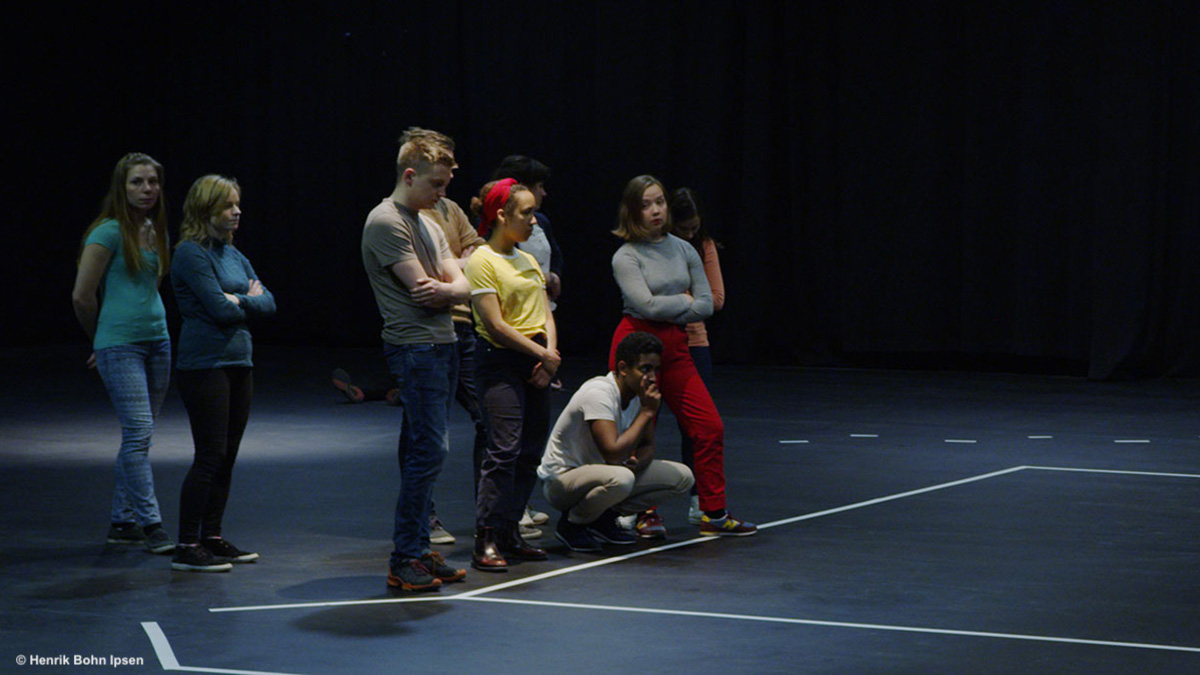
„Rekonstruktion Utøya“ gibt uns einen Einblick in die Gedankenwelt von vier Überlebenden des Attentats auf der norwegischen Insel Utøya am 22. Juli 2011. Mit einer Gruppe von Jugendlichen stellt jeder von ihnen ihre persönlichen Erinnerungen an den Tag nach, durch Markierungen auf dem Boden rekonstruieren sie Häuser, Fluchtwege oder Plätze, an denen sie sich versteckt haben.

Es ist fast unbeschreiblich, wie es Regisseur Carl Javér mit seinem Film schafft das Publikum mitzunehmen und die Gefühle, die die Überlebenden und die Jugendlichen bei der Rekonstruktion durchleben, aufzufangen. Durch unglaublich präzise Kameraführung wird die Mimik der Teilnehmenden so stark eingefangen, dass ich fast das Gefühl habe dabei zu sein.


Man kann miterleben, wie die Gruppe Jugendlicher von einer zur nächsten Rekonstruktion immer emotionaler wird. Sie spielen die selben Minuten vier Mal nach, aber aus vier komplett unterschiedlichen Perspektiven, vier ganz unterschiedliche Geschichten. In der Presse war nach dem Attentat immer nur von 69 Todesopfern zu lesen, aber erst in diesem Moment realisiere ich wirklich, wie viele Jugendliche am 22. Juli die Geschehnisse miterlebten, und wie viele individuelle Geschichten es gegeben haben muss.

Zwischendurch sind immer wieder Sequenzen vom Filmcamp außerhalb der Rekonstruktionen zu sehen, in denen wir einerseits sehen, wie sehr das Thema doch alle mitnimmt, aber auch Momente des Freiseins erleben können. Wie beispielsweise Mohammed und Jenny abends am See sitzen, hinter ihnen die idyllische Berglandschaft Nordnorwegens, Gruppenumarmungen zwischen den Sessions, der Tanz um das Lagerfeuer am Abschlussabend. Szenen wie diese lassen mich aufatmen und lächeln, und für einen Moment überwiegen in mir wieder positive und schöne Gefühle.


Nachdem der Abspann vorbei ist, weiß ich nicht wie ich mich fühlen soll. Betroffen, mitgenommen und vom Film gefesselt sitze ich noch eine Weile still auf meinem Platz, in Gedanken vertieft, und die so ungewöhnliche Ruhe im Kinosaal verrät mir, dass ich damit nicht alleine bin. Es dauert noch einige Stunden bis ich das Gesehene halbwegs in meinem Kopf ordnen und verarbeiten kann, und darüber nachdenke, dass ich trotz der schrecklichen Thematik doch etwas Gutes aus dem Film mitnehmen kann. Am besten trifft es vielleicht das, was Torje nach der Rekonstruktion zu den teilnehmenden Jugendlichen sagte: So etwas wieder aufzuarbeiten und mit anderen zu rekonstruieren bringt Menschen dazu das Dasein der anderen wertzuschätzen und gegenseitig für sich da zu sein. Jede der vier Rekonstruktionen beinhaltete auch wenige glückliche Momente, wie das Wiedersehen von bekannten Gesichtern oder der Anruf der Mutter. Und auch wenn nach dem Film die Erschütterung darüber, dass in einer heutigen Welt Dinge wie auf Utøya immer noch geschehen, am meisten von mir einnimmt, geben mir diese Momente Mut und eine Menge Hoffnung auf das Gute.

„Rekonstruktion Utøya“ ist ein Film über die Ereignisse des 22. Julis auf Utøya, der in seiner Form einzigartig ist. Trotz der schwierigen und vielleicht auch heiklen Thematik vermittelt er uns Mut und bringt uns näher zusammen. Sowohl Rakel, Torje, Jenny und Mohammed, als auch den teilnehmenden Jugendlichen und dem gesamten Filmteam kann ich nur meinen tiefsten Respekt für ihr Arbeit aussprechen.

14.02.19, Clara Bahrs


Taking something good out of the bad


"Rekonstruktion Utøya" gives us an insight into the feelings of the four survivors Rakel, Jenny, Mohammed and Torje of the right-wingend terrorist attack on the Norwegian island of Utøya on July 22nd in 2011. With a group of young people, each of them recreates their memories of the day, reconstructing houses, escape routes or places whith marking strips on the ground.

It is almost breathtaking how director Carl Javér manages to capture the feelings of the four and the young people while the reconstruction with the film. The incredibly precise camera work captures the participants' facial expressions that it almost feels like you were there.

You can experience how the group of young people becomes more and more emotional during the reconstructions. They recreate the same minutes four times, but from four completely different perspectives, four completely different stories. In the news after the terror attack you could mostly just read about there were 69 people who died, but at this moment I realized how many young people were involved on July 22 and how many individual stories there must have been.

In between, you can see sequences from the film camp beyond the reconstructions, in which we feel how everyone is taken by the them, but also experience a few moments of freedom. Like Mohammed and Jenny sitting at the lake in the evening, in front them the idyllic and beautiful norwegian nature, group hugs between the sessions, the dancing around the fire on the last evening. Scenes like these let me breathe a sigh of relief and smile, and for a little moment positive and beautiful feelings are feeding me again.

After the film is over I don't really know how to feel. Affected and taken by the film, I remain for a while in my seat without doing anything, lost in my thoughts, and the unusual silence in the cinema tells me that I am not the only one. It still takes a few hours until I begin to arrange with the seen things in my head, and think about the fact that although the subject is frightening, I can take something good out of the film. Perhaps the best thing is what Torje said to the participating young people after the reconstruction: "Reconstructing something like this and reconstructing it with others leads people to value each other's existence and to be there for each other." Each of the four storys also contained a few happy moments, such as the reunion of familiar faces or a mother's call. And even though after the film the shock of the fact that things like those on Utøya are still happening in today's world still takes the most of me, these happy moments give me courage and a lot of hope.

"Rekonstruktion Utøya" is an unique film about the events of the 22nd Juli on Utøya. Although the topic is difficult, the film gives us courage and brings us closer together. I can only express my deepest respect for Rakel, Torje, Jenny and Mohammed, as well as the participating young people and the entire film team and their work.

14.02.19, Clara Bahrs

Zwischen zwei Städten

Eine Kritik zu Guo Chun Tian.
For English Version

Ständig unterwegs zwischen der einen oder anderen Seite. Zwischen Shenzen und Hong Kong. Mit der Familie in Shenzen, der Schule und den Freunden jedoch in Hong Kong muss Peipei jeden Tag über die Grenze, ist dabei ständig unterwegs, gehört aber nirgendwo richtig hin. Der Versuch den Erwartungen der deutlich wohlhabenderen Freundin gerecht zu werden, gepaart mit einer gleichzeitigen Neugier lässt sie aus einer einmaligen Möglichkeit das lukrative Schmuggeln von iPhones aus Hong Kong, seit Rückgabe an die Chinesische Republik eine steuerlose Sonderverwaltungszone, nach Shenzen für sich entdecken. Hier findet sie ihre neue Familie, fühlt sich wohl, hat Spaß, wird dabei jedoch auch immer weiter in den Sog der Gesetzesverstöße gezogen.
Elektronische Musik mit einem starken Beat begleitet sie auf ihrem Weg. Grelle Neonlichter der beiden Städte prägen die Aufnahmen. Man erhält kleine Einblicke in ihr Schulleben, ihre ersten Ausbrüche elterlicher Regeln beim Schulschwänzen und die Differenzen zum Leben der reichen Freundin, die unbedingt nach Japan reisen möchte, um echten Schnee zu sehen und für die die Frage der Finanzierung keinerlei Rolle spielt.

All dies ist unterhaltsam gestaltet, bleibt jedoch auch sehr an der Oberfläche. Viele Themen werden angeschnitten, wie beispielsweise das Studieren im Ausland und die entsprechende Ungleichheit, wenn dem Sohn dies ermöglicht wird, der Tochter jedoch nicht. Dem Thema wird jedoch kaum Raum geboten, intensiver erforscht zu werden. So wird recht unvermittelt auch eine kleine Romanze eingeführt, die mir etwas erzwungen, unpassend, erscheint. Dabei möchte ich nicht sagen, dass alle Themen immer bis ins Tiefste beleuchtet werden müssen. In manchen Fällen wäre die Ausleuchtung eines anderen Themas auch zu viel und überwältigend und das ledigliche Anschneiden demnach kunstvoll eingesetzt. In diesem Film erscheint es mir jedoch zu gewollt.
Leider werden auch die Differenzen zwischen Shenzen und Hong Kong kaum tiefergehend beleuchtet. Insbesondere die Identitätsspaltungen von Personen, die sowohl in Shenzen als auch in Hong Kong leben oder arbeiten, aber in beiden Städten nicht richtig ankommen, interessierte mich im Vorhinein. Auch über die allgemeinen Unterschiede hätte ich als Außenstehende gerne mehr erfahren. Mit diesem Thema wird sich jedoch nicht tiefer auseinandergesetzt. Im Gegenteil wird recht viel vorausgesetzt, sodass ich mich an manchen Stellen frage, ob mir nicht vielleicht doch der Hintergrund fehlt, um tiefergehende Aspekte des Films zu durchschauen.
Alles in allem also ist „Guo Chun Tian“ ein unterhaltsamer Film, der mich durch seinen Mangel an Tiefe jedoch nicht ganz überzeugen kann.

Do., 14.02.2019, Sarah Gosten


In-Between Two Cities


Always on the move between one side and the other. Between Shenzen and Hong Kong. With the family in Shenzen, but school and friends in Hong Kong Peipei has to cross the border every day, is constantly on the move, but does not belong anywhere. The attempt to live up to the expectations of her much wealthier girlfriend, coupled with a curiosity at the same time, makes her discover the lucrative smuggling of iPhones to Shenzen from Hong Kong, a taxless special administrative zone since the return to the Chinese Republic. Here she finds her new family, feels at home, has fun, but is also drawn further and further into the maelstrom of law violations.
Electronic music with a strong beat accompanies her on her way. Bright neon lights of the two cities characterize the recordings. You gain some insights into her school life, her first outbursts of parental rules when truanting school and the differences to the life of her rich friend, who absolutely wants to travel to Japan to see real snow and for whom the question of financing plays no role.


All of this is entertaining, but remains very much on the surface. Many issues are touched upon, such as studying abroad and the inequality that this entails when it is possible for the son to do so, but not for the daughter. However, there is hardly any room for the subject to be explored more intensively. Another thing added is a small romance being introduced quite abruptly, which seems somewhat forced. I don't want to say that all topics always have to be examined in depth. In some cases the illumination of another subject would be too much and overwhelming, and just leaving it in as a statement would suffice. In this film, however, it seems too intentional to me.
Unfortunately, the differences between Shenzen and Hong Kong are also barely examined more deeply. Especially the split identities of people who live or work in Shenzen as well as in Hong Kong, but do not really belong in either city, interested me in advance. As an outsider, I would also have liked to know more about the general differences. However, this topic is not dealt with any deeper. On the contrary, a lot is assumed, so that at some points I ask myself whether I might not be missing the background in order to see through more profound aspects of the film.
All in all, „Guo Chung Tian“ is an entertaining movie, which cannot really convince me because of its lack of depth.

Thursday, 14th Feb 2019, Sarah Gosten